Compliance and Regulation: Building Trust in the Global Payments Ecosystem

James Whitfield
27 April 2026
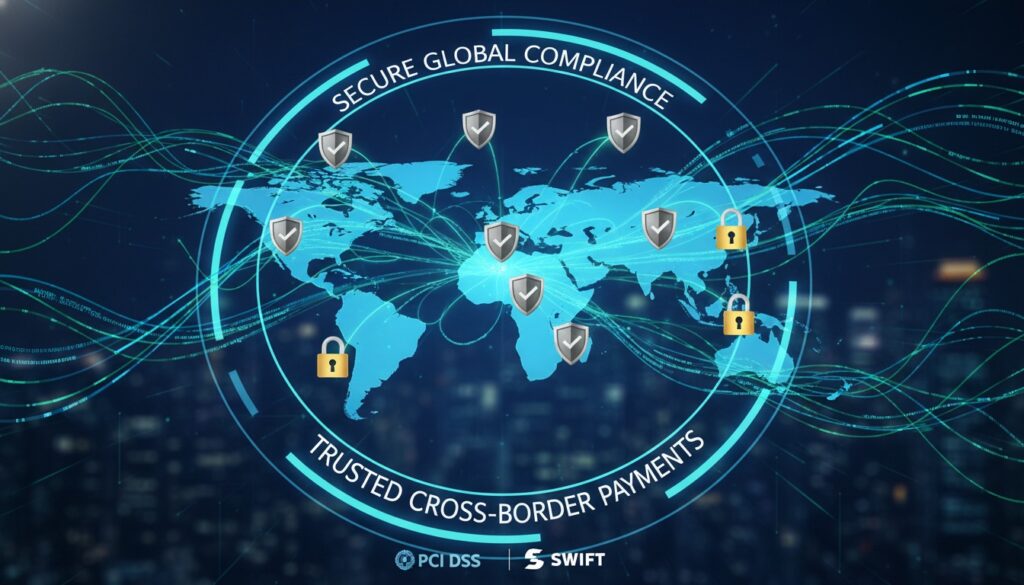
Compliance and Regulation: Building Trust in the Global Payments Ecosystem
In an era where digital payments flow across borders in milliseconds, the regulatory landscape has never been more complex—or more critical. From anti-money laundering (AML) directives in the European Union to data privacy mandates in Asia-Pacific, businesses operating in the global payments space must navigate a web of overlapping rules, standards, and expectations.
But here’s the truth that forward-thinking companies already know: compliance isn’t a cost center—it’s a competitive advantage. Organizations that treat regulatory alignment as a strategic asset unlock faster market entry, deeper client trust, and long-term resilience in an increasingly scrutinized industry.
In this post, we’ll explore why proactive compliance matters, break down the key regulatory frameworks shaping global payments, and share actionable strategies for turning compliance into a growth driver.
Why Compliance Is the New Currency of Trust
Trust is the foundation of every financial transaction. Whether a consumer is sending money to a family member overseas or a multinational corporation is settling invoices across continents, every party in the chain needs confidence that the system is secure, transparent, and lawful.
“In the payments industry, trust isn’t built through marketing—it’s built through compliance. Every audit passed, every regulation met, and every risk mitigated sends a signal to the market that you are a reliable partner.”
Regulatory compliance serves as a proxy for trustworthiness. When a payment service provider (PSP) can demonstrate adherence to rigorous standards—such as PCI DSS, GDPR, or local licensing requirements—it sends a powerful message to partners, clients, and end users alike.
The Cost of Non-Compliance
The consequences of falling short are severe and multifaceted:
- Financial penalties: In 2023 alone, global regulators issued billions of dollars in fines related to AML failures, sanctions violations, and data breaches.
- Reputational damage: A single compliance failure can erode years of brand equity, driving customers to competitors.
- Operational disruption: Regulatory enforcement actions can freeze operations, revoke licenses, and halt market expansion.
- Loss of partnerships: Banks and financial institutions increasingly require compliance certifications before onboarding new partners.
- The EU’s Anti-Money Laundering Directives (AMLD): Now in its sixth iteration (6AMLD), the EU continues to expand the scope of AML obligations, including enhanced due diligence requirements and broader criminal liability.
- The Bank Secrecy Act (BSA) and FinCEN regulations in the United States, which mandate suspicious activity reporting and customer identification programs.
- FATF Recommendations: The Financial Action Task Force sets international standards that most jurisdictions adopt, making its guidelines a de facto global benchmark.
- GDPR (General Data Protection Regulation): The EU’s landmark privacy law imposes strict requirements on how personal data is collected, processed, and stored—with fines of up to 4% of global annual revenue for violations.
- CCPA/CPRA in California, which grants consumers extensive rights over their personal information.
- PDPA, POPIA, and LGPD: Data protection laws in Thailand, South Africa, and Brazil respectively, reflecting the global trend toward stronger privacy protections.
- PSD2/PSD3 (Payment Services Directive): The EU’s payment regulation framework promotes open banking, strong customer authentication (SCA), and consumer protection.
- PCI DSS (Payment Card Industry Data Security Standard): A global standard for securing cardholder data, mandatory for any entity that processes, stores, or transmits credit card information.
- Local licensing requirements: Many jurisdictions—including Singapore (MAS), the UK (FCA), and Hong Kong (HKMA)—require specific licenses for payment service providers.
- Leadership buy-in: Executives should champion compliance as a core business value, not an afterthought.
- Training and awareness: Regular training programs ensure that every employee—from developers to customer support—understands their role in maintaining compliance.
- Incentive alignment: Tie compliance metrics to performance reviews and bonuses to reinforce accountability.
- Automated KYC/KYB: AI-powered identity verification tools can onboard customers in minutes while maintaining rigorous compliance standards.
- Transaction monitoring: Machine learning algorithms can detect suspicious patterns in real time, reducing false positives and accelerating investigations.
- Regulatory change management: Platforms that track regulatory updates across jurisdictions help compliance teams stay ahead of new requirements.
- Automated reporting: Streamline the generation and submission of regulatory reports to reduce human error and free up resources.
- Map your regulatory obligations across every jurisdiction where you operate or plan to expand.
- Identify common requirements and build a baseline compliance program that satisfies the most stringent standards.
- Layer on jurisdiction-specific requirements as needed, using modular policies and procedures.
- Engage local legal counsel to ensure nuanced understanding of regional regulations.
- Conduct regular gap analyses to identify and address emerging risks.
- Showcase certifications prominently: Display PCI DSS compliance, ISO 27001 certification, and relevant licenses on your website and marketing materials.
- Provide compliance documentation proactively: Make it easy for prospective clients to assess your compliance posture during due diligence.
- Offer compliance support to clients: Help your clients meet their own regulatory obligations by providing tools, APIs, and documentation that simplify their compliance workflows.
- Publish thought leadership: Share insights on regulatory trends to position your brand as a trusted authority in the space.
- [ ] Licensing: Confirm you hold all required licenses in every jurisdiction where you operate.
- [ ] KYC/KYB: Implement robust customer and business verification processes.
- [ ] AML/CTF: Deploy transaction monitoring and suspicious activity reporting systems.
- [ ] Sanctions screening: Screen all transactions and counterparties against up-to-date sanctions lists.
- [ ] Data privacy: Ensure compliance with GDPR, CCPA, and other applicable data protection laws.
- [ ] PCI DSS: Maintain current PCI DSS certification if you handle cardholder data.
- [ ] Incident response: Have a documented and tested plan for data breaches and security incidents.
- [ ] Record keeping: Maintain comprehensive records as required by regulators (typically 5-7 years).
- [ ] Training: Conduct regular compliance training for all employees.
- [ ] Audit readiness: Perform internal audits and be prepared for external regulatory examinations.
Key Regulatory Frameworks Shaping Global Payments
Understanding the regulatory landscape is the first step toward mastering it. Here are the most influential frameworks that payments businesses must navigate today:
1. Anti-Money Laundering (AML) and Counter-Terrorism Financing (CTF)
AML/CTF regulations form the backbone of financial compliance worldwide. Key frameworks include:
2. Data Privacy and Protection
As payments become increasingly digital, the volume of personal and financial data flowing through systems has exploded. Key regulations include:
3. Payment Services Regulations
4. Sanctions and Embargoes
Global sanctions regimes administered by bodies like OFAC (U.S.), the EU Council, and the UN Security Council require payments companies to screen transactions and counterparties against constantly updated sanctions lists. Failure to comply can result in criminal prosecution and catastrophic fines.
Turning Compliance Into a Strategic Advantage
Now that we understand the landscape, let’s explore how businesses can move beyond mere compliance and transform regulatory alignment into a genuine competitive edge.
Build a Compliance-First Culture
Compliance cannot be siloed within a legal or risk department. It must be woven into the fabric of the organization:
Pro tip: Companies that embed compliance into their product development lifecycle—rather than bolting it on at the end—ship faster and encounter fewer regulatory roadblocks.
Invest in RegTech and Automation
The sheer volume and complexity of regulatory requirements make manual compliance processes unsustainable. Regulatory technology (RegTech) solutions can dramatically improve efficiency and accuracy:
Adopt a Multi-Jurisdictional Compliance Strategy
For businesses operating across borders, a patchwork approach to compliance is a recipe for failure. Instead, adopt a unified compliance framework that can be adapted to local requirements:
Leverage Compliance as a Sales Tool
In B2B payments, compliance credentials can be a decisive factor in winning new business. Consider these strategies:
Navigating Emerging Regulatory Trends
The regulatory landscape is not static. Several emerging trends will shape compliance requirements in the coming years:
Cryptocurrency and Digital Asset Regulation
As digital assets become more integrated into the payments ecosystem, regulators worldwide are racing to establish clear frameworks. The EU’s MiCA (Markets in Crypto-Assets) regulation, which came into effect in 2024, is a landmark example. Payments businesses that handle or interact with digital assets must prepare for increasing regulatory scrutiny.
AI and Algorithmic Accountability
With the growing use of AI in fraud detection, credit scoring, and customer onboarding, regulators are beginning to demand transparency and fairness in algorithmic decision-making. The EU AI Act sets a precedent that other jurisdictions are likely to follow.
Cross-Border Regulatory Cooperation
Regulators are increasingly collaborating across borders to address the challenges of global payments. Initiatives like the G20’s cross-border payments roadmap and the FSB’s recommendations signal a move toward greater harmonization—but also higher baseline expectations.
Embedded Finance and Platform Regulation
As payments functionality becomes embedded in non-financial platforms (e-commerce, social media, SaaS), regulators are expanding the scope of who falls under financial services regulation. Businesses offering embedded payment solutions must ensure they—and their platform partners—meet all applicable requirements.
Practical Compliance Checklist for Payments Businesses
To help you get started—or audit your current posture—here’s a practical checklist:
Conclusion: Compliance as a Catalyst for Growth
The global payments ecosystem is evolving at breakneck speed, and regulatory frameworks are evolving with it. Businesses that view compliance as a burden will find themselves perpetually playing catch-up—spending more, moving slower, and losing ground to competitors who have embraced a different mindset.
The winners in this space will be those who treat compliance as a catalyst for growth. By building compliance-first cultures, investing in RegTech, adopting multi-jurisdictional strategies, and leveraging their regulatory posture as a market differentiator, payments businesses can unlock new markets, win more clients, and build the kind of deep, enduring trust that defines industry leaders.
Regulation isn’t going away. If anything, it’s intensifying. The question isn’t whether you can afford to invest in compliance—it’s whether you can afford not to.
Take the Next Step
Are you ready to transform your compliance strategy from a reactive obligation into a proactive growth engine? Start by auditing your current regulatory posture against the checklist above. Identify gaps, prioritize investments in automation and RegTech, and engage with legal experts in your target markets.
Have questions about navigating compliance in the global payments landscape? Drop a comment below or reach out to our team—we’d love to help you build a compliance strategy that accelerates your business.
Written by Emma Davis | Compliance & Regulation