Why an API-First Approach Is the Key to Scaling Your Payment Infrastructure

James Whitfield
27 April 2026
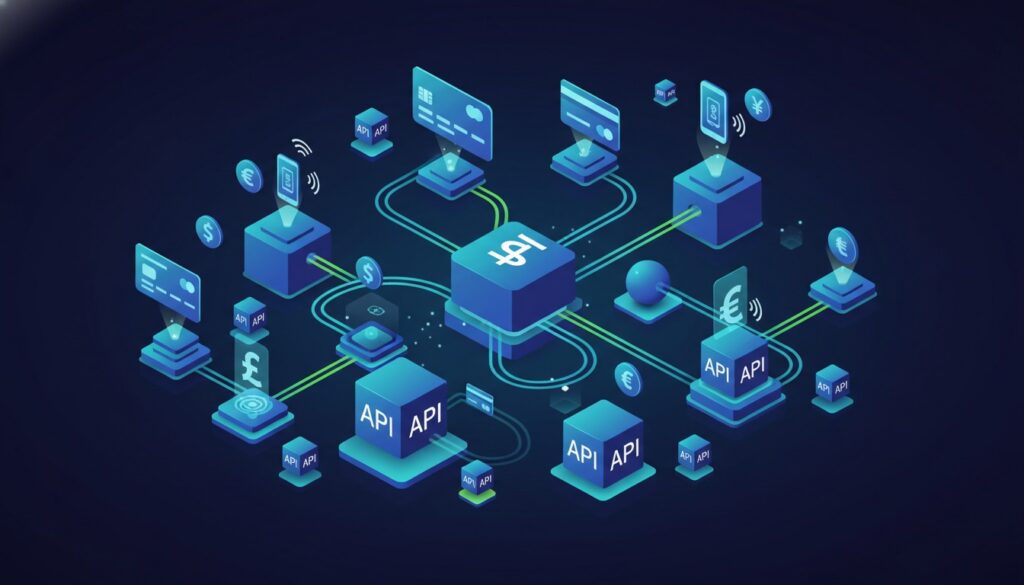
Why an API-First Approach Is the Key to Scaling Your Payment Infrastructure
Introduction
If you’ve ever tried bolting a new payment method onto a legacy system at 2 a.m. before a product launch, you already know the pain. Hardcoded integrations, brittle middleware, and undocumented internal protocols turn what should be a straightforward feature release into a multi-sprint nightmare. The root cause isn’t a lack of talent on your engineering team — it’s an architecture that was never designed to evolve.
The modern digital economy demands payment infrastructure that can spin up new currencies, onboard new acquirers, and support emerging payment rails — all without rewriting core business logic. An API-first approach is the architectural philosophy that makes this possible. Rather than treating APIs as an afterthought layered on top of monolithic systems, API-first design positions well-documented, versioned, and composable interfaces as the primary contract between every service in your payment stack.
In this post, we’ll explore why API-first architecture has become the gold standard for scaling payment infrastructure, how it reduces operational overhead, and what practical steps your team can take to adopt it — whether you’re building from scratch or modernizing a legacy platform.
The Problem with Legacy Payment Architectures
Before we dive into the solution, let’s diagnose the disease. Traditional payment systems were typically built as tightly coupled monoliths. They served their purpose when a business operated in a single market, accepted one or two card brands, and processed transactions in a single currency. But the world has changed:
- Global expansion means supporting dozens of currencies and local payment methods (PIX in Brazil, iDEAL in the Netherlands, UPI in India).
- Regulatory fragmentation requires region-specific compliance logic (PSD2 in Europe, RBI guidelines in India, PCI DSS everywhere).
- Customer expectations have shifted toward instant, frictionless checkout experiences across web, mobile, and in-app surfaces.
- Business model diversity — subscriptions, marketplaces, on-demand platforms — each demands different payment orchestration patterns.
- Independent deployments — Ship a fix to the refund service without touching authorization.
- Targeted scaling — Auto-scale the tokenization service during peak checkout hours without over-provisioning the entire stack.
- Cleaner monitoring — Each API endpoint has its own latency, error rate, and throughput metrics.
- OAuth 2.0 / API key authentication per partner or service
- Rate limiting and throttling to prevent abuse
- Idempotency keys to safely retry failed transactions without double-charging
- Audit logging at the API gateway level for regulatory traceability
- Resource naming conventions (`/payments`, `/refunds`, `/disputes`)
- Error response format (use RFC 7807 Problem Details for consistency)
- Pagination strategy for list endpoints
- Webhook event schema for asynchronous notifications
- Authorization success rates by acquirer and payment method
- End-to-end latency (P50, P95, P99)
- Webhook delivery success rates
- API error rates segmented by error code
- Over-engineering the first version. Ship a minimal, well-designed API and iterate. You don’t need to support every payment method on day one.
- Ignoring idempotency. Network failures are inevitable in payments. Every mutating endpoint must support idempotency keys to prevent duplicate transactions.
- Treating documentation as an afterthought. If your API docs are stale, your API-first strategy is dead on arrival. Automate doc generation from your OpenAPI spec.
- Skipping contract testing. Use tools like Pact or Schemathesis to verify that your implementation matches your API contract on every CI/CD build.
- Neglecting backward compatibility. Breaking changes in a payment API can cause real financial harm. Treat your API contract with the same rigor as a legal agreement.
“The cost of change in a monolithic payment system grows exponentially with the number of integrations it supports.” — A lesson every payments engineer learns the hard way.
What Does “API-First” Actually Mean?
The term gets thrown around a lot, so let’s be precise. An API-first approach means that the API contract is designed, documented, and agreed upon before any implementation begins. It’s not just about having APIs — it’s about making them the foundational building block of your system.
Here are the core principles:
1. Design Before Code
Teams start by writing an OpenAPI (Swagger) specification or a similar contract definition. This spec becomes the single source of truth. Frontend engineers, backend engineers, QA, and even external partners can work in parallel because the contract is stable.
2. Versioned and Backward-Compatible
API-first systems use semantic versioning (`v1`, `v2`, etc.) and deprecation policies that give consumers time to migrate. This is critical in payments, where downstream partners (acquirers, PSPs, fraud engines) integrate at different speeds.
3. Self-Documenting and Developer-Friendly
Great payment APIs ship with interactive documentation, sandbox environments, and SDKs in multiple languages. The goal is to reduce time-to-first-transaction for any engineer — internal or external — to minutes, not days.
4. Composable and Modular
Each API represents a discrete capability: tokenization, authorization, capture, refund, settlement, reporting. These can be composed into complex workflows without any single service becoming a bottleneck.
“`
POST /v2/payments
{
“amount”: 4999,
“currency”: “EUR”,
“paymentmethod”: “card”,
“cardtoken”: “tokabc123″,
“metadata”: {
“orderid”: “ord789″,
“customerid”: “cust_456”
}
}
“`
The example above illustrates the simplicity of a well-designed payment API. A single, intuitive endpoint handles the complexity of routing, currency conversion, and acquirer selection behind the scenes.
How API-First Architecture Accelerates Payment Scaling
Now let’s get to the heart of the matter. Here are the concrete ways an API-first approach transforms your ability to scale.
Faster Multi-Currency and Multi-Method Launches
When your payment infrastructure is API-first, adding a new currency or payment method is a configuration change, not a code change. The API contract remains stable; only the backend routing logic and acquirer adapter need updating. Engineering teams can launch in new markets in days rather than quarters.
Real-world example: A European SaaS company migrating from a legacy gateway to an API-first orchestration layer reduced their time to launch a new payment method from 12 weeks to 5 days. The API surface didn’t change — they simply added a new adapter behind the existing `/payments` endpoint.
Reduced Operational Overhead
API-first systems naturally encourage separation of concerns. Tokenization is handled by one service, fraud scoring by another, settlement by a third. When an issue arises in reconciliation, your on-call engineer doesn’t need to understand the entire monolith — they trace the API calls, identify the failing service, and fix it in isolation.
This modularity also enables:
Seamless End-User Experiences
An API-first payment layer lets your frontend and mobile teams iterate on the checkout experience independently of backend payment logic. They consume stable, well-documented APIs and can A/B test different flows, add one-click payment options, or implement progressive disclosure — all without waiting for backend releases.
Pro tip: Use webhooks alongside your APIs to deliver real-time payment status updates to your frontend. This eliminates polling, reduces latency, and creates a smoother user experience.
Easier Compliance and Security
PCI DSS scope reduction is a massive benefit. When tokenization is exposed as a standalone API (often via a hosted field or client-side SDK), sensitive card data never touches your servers. Your PCI compliance surface shrinks dramatically, reducing both audit costs and security risk.
Similarly, API-first architectures make it straightforward to implement:
Practical Steps to Adopt an API-First Payment Architecture
Convinced but not sure where to start? Here’s a pragmatic roadmap:
Step 1: Audit Your Current Integration Points
Map every system that touches payments — your checkout frontend, order management system, ERP, fraud engine, reconciliation tools, and reporting dashboards. Identify which integrations are point-to-point (brittle) and which go through a centralized layer.
Step 2: Define Your API Contract First
Before writing a line of code, draft your OpenAPI specification. Involve stakeholders from engineering, product, finance, and compliance. Key decisions to make early:
Step 3: Build an Abstraction Layer Over Acquirers
Don’t let acquirer-specific logic leak into your API. Create an adapter pattern where each acquirer (Stripe, Adyen, Worldpay, local processors) implements a common internal interface. Your public API stays clean; the routing engine decides which adapter to call based on currency, payment method, and business rules.
Step 4: Invest in a Sandbox Environment
A sandbox isn’t a nice-to-have — it’s essential. Internal teams and external partners should be able to test the full payment lifecycle (authorize → capture → refund → webhook) without processing real money. Seed your sandbox with realistic test scenarios, including edge cases like partial captures, currency mismatches, and 3DS challenges.
Step 5: Implement Observability from Day One
Every API call should generate structured logs, distributed traces, and metrics. Use tools like OpenTelemetry to instrument your services. Set up dashboards that track:
Step 6: Iterate with Versioning, Not Breakage
When you need to evolve your API, add new fields and endpoints rather than modifying existing ones. Use `Sunset` headers to communicate deprecation timelines. Maintain at least two active versions simultaneously to give consumers migration runway.
Common Pitfalls to Avoid
Even with the best intentions, teams stumble. Watch out for these traps:
The Business Case: Beyond Engineering
API-first payment infrastructure isn’t just a technical win — it’s a strategic advantage. Consider the business outcomes:
| Metric | Legacy Approach | API-First Approach |
|—|—|—|
| Time to launch new market | 3–6 months | 1–2 weeks |
| Integration time for new partner | 4–8 weeks | 3–5 days |
| PCI compliance scope | Broad (SAQ D) | Narrow (SAQ A / A-EP) |
| Incident resolution time | Hours | Minutes |
| Developer onboarding | Days of tribal knowledge | Self-serve via docs + sandbox |
These aren’t hypothetical numbers. Companies like Stripe, Adyen, and Checkout.com have built billion-dollar businesses precisely because they understood that the API is the product. Even if you’re not a payments company, adopting this mindset for your internal payment infrastructure yields the same structural benefits.
Conclusion
The demands on payment infrastructure are only growing. New markets, new payment methods, new regulations, and ever-higher customer expectations make it impossible to sustain a monolithic, integration-by-integration approach. An API-first architecture isn’t a trend — it’s the only scalable path forward.
By designing your API contracts first, building modular services behind stable interfaces, and investing in developer experience (documentation, sandboxes, observability), you create a payment platform that can evolve as fast as your business does. You reduce operational overhead, accelerate time-to-market, and — most importantly — deliver the seamless payment experiences your customers expect.
The best time to adopt an API-first approach was when you built your first payment integration. The second-best time is now.
Ready to Modernize Your Payment Stack?
If your team is wrestling with legacy payment integrations, slow multi-currency rollouts, or brittle point-to-point connections, it’s time to rethink your architecture. Start by auditing your current payment touchpoints and drafting your first OpenAPI specification. Even a small step toward API-first design will pay dividends in speed, reliability, and scalability.
Have questions or want to share your own API-first payment journey? Drop a comment below or reach out — we’d love to hear how your team is tackling these challenges.
Written by David Miller — covering the intersection of payments, engineering, and scalable architecture.